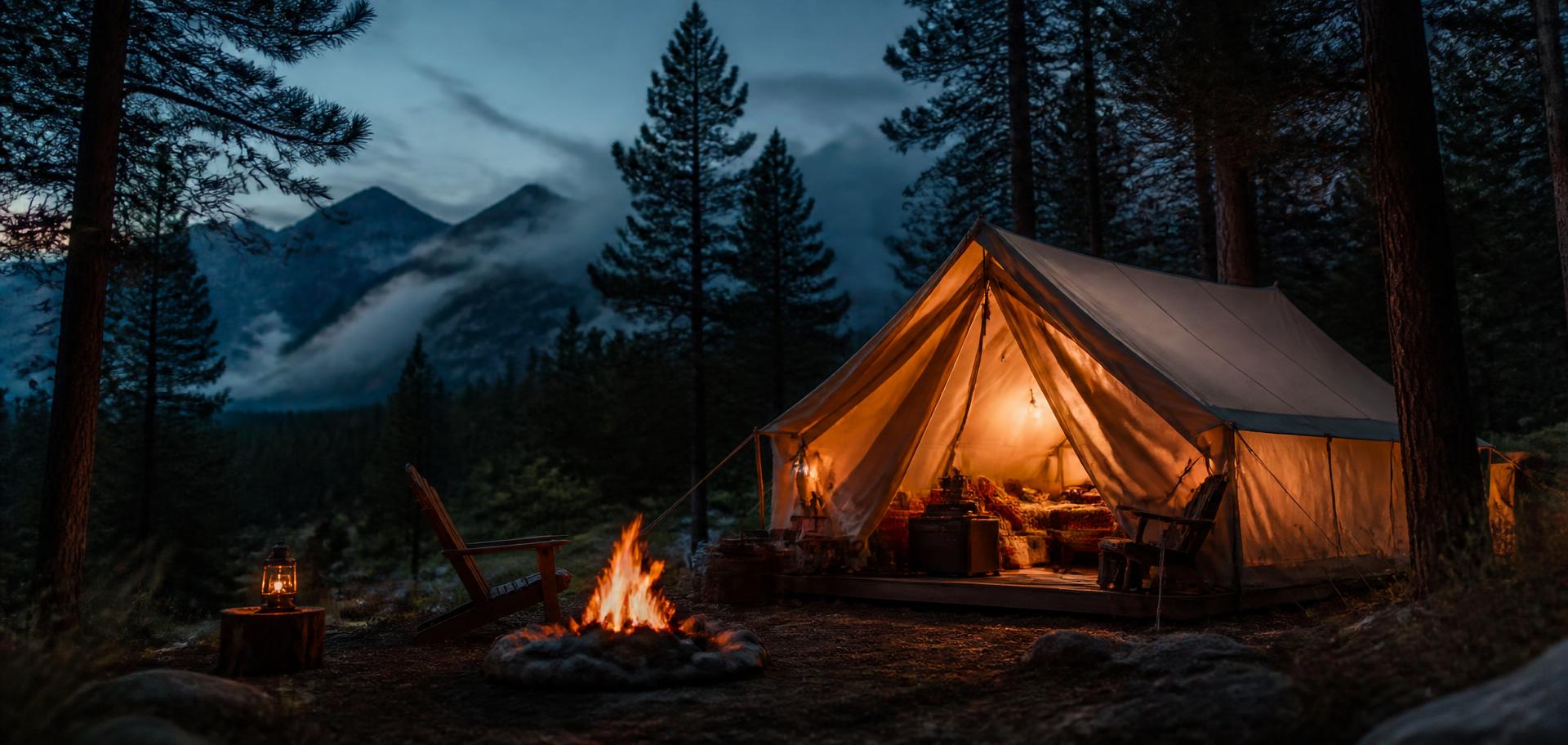
Tent Camping
Everything you need to plan, pack, set up, camp comfortably, solve problems, and become a better tent camper — all in one place.
Beginner friendly • Expert useful • Interactive tools • Complete camping guides
Quick start
Getting Started Tent Camping
Jump directly to what you're looking for.
Where are you in your trip?
Your Tent Camping Journey
New here?
First Time Tent Camping?
We've made this easy. Follow the first-trip pathway and we'll walk you through everything from choosing a campsite to packing up for home.
Start Here
Learn the fundamentals and set your path — beginner or experienced.
Start here
Tent Camping 101
Eight short chapters that take you from never-camped to confident. Your progress saves automatically.
Reference
Tent Camping Terms, Plainly Explained
Every word a camper uses, broken down in plain language. 15 terms and counting.
Interactive
Tent Camping Toolbox
Don't just read about camping. Build your trip.
Optional
Tell Us About Your Camping Style
We'll reorder the recommendations. Nothing gets hidden.
Prepare
Choose your tent, size it right, and pack for the forecast.
Choose your tent
Find the Right Tent
Six popular shapes first. Open any card for the full breakdown, or select up to three to compare.
Sizing
What Size Tent Do I Actually Need?
Tent capacity is sleeping capacity — not necessarily comfortable capacity.
2-Person
30-35 sq ft
Realistically sleeps 1 comfortably.
4-Person
55-65 sq ft
Realistically sleeps 2 comfortably.
6-Person
90-100 sq ft
Realistically sleeps 4 comfortably.
8-Person
110-130 sq ft
Realistically sleeps 5 comfortably.
10+ Person
150+ sq ft
Realistically sleeps 6 comfortably.
Know your gear
Know Your Tent
Tap a part of the tent to learn what it does.
Rainfly
- What it is
- The waterproof outer layer that covers the tent body.
- Why it matters
- It is the only part actually keeping rain off you.
- Common mistake
- Pitching it loose so it touches the inner tent.
- Pro tip
- Tension it until there is an air gap all the way around.
Packing & gear
Everything You Need. Nothing You Don't.
Open a category to work through its checklist. Progress saves on this device.
Camp kitchen
Build Your Camp Kitchen
Cooking
Stoves, fuel and cookware sized to your group.
Food Storage
Coolers, dry bins and keeping it cold.
Water
Drinking, cooking and cleaning.
Cleanup
Dishes, grey water and waste.
Wildlife-Safe Food Storage
Requirements vary by location.
Conditions
Ready for Whatever the Weather Does
Set Up Camp
Site selection, the 12-step pitch, and anchoring that holds.
Setup
From Tent Bag to Campsite
Twelve steps, one at a time. Expand any step for the details.
Step 1 of 12
Inspect the campsite
Walk the whole site before unpacking anything.
Site selection
Where Should Your Tent Go?
Two lists, then a quick game to prove it stuck.
Great spot
- Flat and level enough to lie down comfortably
- Slightly elevated above the surrounding ground
- Good drainage, no channel running through it
- Nothing dead or loose overhead
- Some wind protection, not a wind tunnel
Bad spot
- Low depression that collects water
- A visible drainage channel or wash
- Dead branches or leaning trees above
- Loose, sloped or unstable ground
- Fully exposed ridge in wind or storms
Pick the campsite
Where would you pitch your tent?
Campsite
Build Your Campsite
Six zones. Get the relationships right and camp runs itself.
Sleep zone
Living zone
Cooking zone
Food storage
Vehicle
Fire area
Technical
Tent Stakes & Guy Lines
Two cheap details that decide whether your tent survives the night.
Which stake?
Soft ground
Standard Y-stakes or shepherd hooks
Angle 45 degrees and load them low.
Hard ground
Steel nail or spike stakes
Use a mallet on the head; pilot with a rock if needed.
Rocky ground
Rock anchors and extra cord
Tie off to boulders or logs; weight lines with rocks.
Sand
Long sand stakes or buried deadman
Bury a stuff sack of sand horizontally and tie to it.
Snow
Snow stakes or buried gear anchors
Bury sideways, stomp the snow and let it sinter for 15 minutes.
Guy line tension
Incorrect
Slack line, stake too close, near-vertical angle. The fly sags onto the inner tent and gusts snap the line out.
Correct
Taut line at roughly 45 degrees, stake angled away from the tent. Load spreads and the fly keeps its air gap.
Camp Comfortably
Sleep warm, eat well, and make camp feel good.
Comfort
Your Best Night of Sleep Outdoors
Sleep is a stack. Each layer does a different job.
Comfort layers
Liner, blanket, dry base layers, hat and socks.
Pillow
Compressible camp pillow beats a stuffed jacket every time.
Sleeping bag or quilt
Choose by comfort rating, not survival rating.
Sleeping pad
The layer that actually keeps you warm. Match R-value to the overnight low.
Tent floor
A footprint under it protects against abrasion and moisture.
Ground
Clear it. Rocks and roots ruin the layers above.
R-value explained
Bag temperature ratings explained
Upgrades
Make Camp Even Better
String lights
Warm ambient light beats a harsh lantern.
Camp pillow
Compressible and far better than a stuffed jacket.
Doormat
Cuts the dirt entering your tent by most of it.
Extra guy line and stakes
Upgrade the weakest part of any tent.
Collapsible bucket
Dishes, water hauling, wet gear.
Skills
Skills Every Tent Camper Should Know
Short, practical, and you can mark them off as you learn them.
Stake a Tent
Use Guy Lines
Choose a Campsite
Keep a Tent Dry
Understand R-Values
Understand Tent Ventilation
Store Food Properly
Break Camp Correctly
Essential Camping Knots
Who's coming
Camping With…
Stay Safe
Weather, wildlife, fire and the rules that keep everyone welcome.
Safety center
Camp Smart. Camp Safe.
Requirements and conditions vary by campground and jurisdiction — always follow posted local rules.
Stewardship
Leave No Trace
Good neighbors
Campground Etiquette
DO — Respect quiet hours.
DON'T — Blast music across the campground.
DO — Keep your gear inside your site boundary.
DON'T — Spread chairs and totes into your neighbor's space.
DO — Walk the roads and paths.
DON'T — Cut through occupied campsites.
DO — Aim headlamps down.
DON'T — Sweep bright lights through other tents.
DO — Run generators only in posted hours and areas.
DON'T — Idle a generator through dinner and dark.
DO — Leash pets and pick up after them.
DON'T — Let dogs roam or bark all night.
DO — Keep fires small and attended where allowed.
DON'T — Burn trash or leave a smoldering ring.
DO — Keep an eye on kids and bikes.
DON'T — Let children cut through other sites.
DO — Bag trash and use the provided receptacles.
DON'T — Leave food scraps in the fire ring.
DO — Clean up after yourself in shared bathrooms.
DON'T — Wash dishes in the bathroom sink.
DO — Park fully within your site pad.
DON'T — Block the road or a neighbor's access.
Learn from others
Don't Learn These the Hard Way
Fix & Maintain
Solve problems in the field and make your gear last.
Troubleshooting
Something Went Wrong?
Tell us what's happening. We'll help you fix it.
Moisture
Dry Tent. Happy Camper.
Waterproofing
Rainfly
Footprint
Ventilation
Why is my tent wet?
Departure
Leave Camp Better Than You Found It
Maintenance
Tent Care & Repair
After your trip
Make Your Next Trip Even Better
Two minutes now saves an hour of guessing before your next trip.
0 of 7 answered — saved on this device. Sign in to keep your trip history and packing recommendations across devices.
Pro Tent Camper Hub
Advanced technique, systems and craft for experienced campers.
Beyond the basics
Pro Tent Camper Hub
Advanced technique for campers who already have the fundamentals down.
Answers
Tent Camping FAQ
Ready to Go Camping?
You've got the knowledge. Now build the trip.
Your lists and progress save on this device. Create a free account to keep them everywhere.